Mu Cang Chai and the Hill Tribe Regions of Yen Bai: Trekking, Rice Terraces and Travel Guide
Mu Cang Chai is one of the most spectacular mountain destinations in Northern Vietnam. Famous for its dramatic rice terraces, high mountain passes, Hmong villages and remote trekking trails, this region offers one of the most authentic travel experiences in the country.
Located in the historic hill tribe region of Yen Bai Province, Mu Cang Chai is a dream destination for photographers, trekkers, motorbike riders and travellers who want to experience rural Vietnam beyond the usual tourist trail.
For travellers planning an adventure in Northern Vietnam, Go Vietnam Adventure can help you explore Mu Cang Chai, Yen Bai and the surrounding mountain regions with local knowledge and authentic travel experiences.
For additional destination information, you can also visit the official Vietnam tourism website: Vietnam National Tourism Authority guide to Mu Cang Chai. General background information is also available on Wikipedia.
Table of Contents
- Where is Mu Cang Chai?
- Why Visit Mu Cang Chai and Yen Bai?
- Hill Tribe Culture in Yen Bai
- The Rice Terraces of Mu Cang Chai
- Best Villages to Visit
- Trekking in Mu Cang Chai
- Best Transport Options
- Best Time to Visit
- Suggested Itinerary
- FAQ
Where is Mu Cang Chai?
Mu Cang Chai is located in the mountainous northwest of Vietnam, around 300 kilometres from Hanoi. The region sits at the foot of the Hoang Lien Son mountain range and is reached by travelling through Nghia Lo, Tu Le and the famous Khau Pha Pass.
The journey from Hanoi usually takes around 6 to 8 hours depending on road conditions, stops and the type of transport. Although it is not the easiest destination to reach, that is part of what makes Mu Cang Chai so special. The distance has helped preserve its traditional character and quiet mountain atmosphere.
The area is best known for steep valleys, high mountain roads, terraced rice fields and ethnic minority villages. Compared with Sapa, Mu Cang Chai receives fewer tourists, making it ideal for travellers who want a more peaceful and authentic experience.
Why Visit Mu Cang Chai and Yen Bai?
Mu Cang Chai is one of Vietnam’s most beautiful rural destinations. It combines natural scenery, cultural diversity and outdoor adventure in a way few places can match.
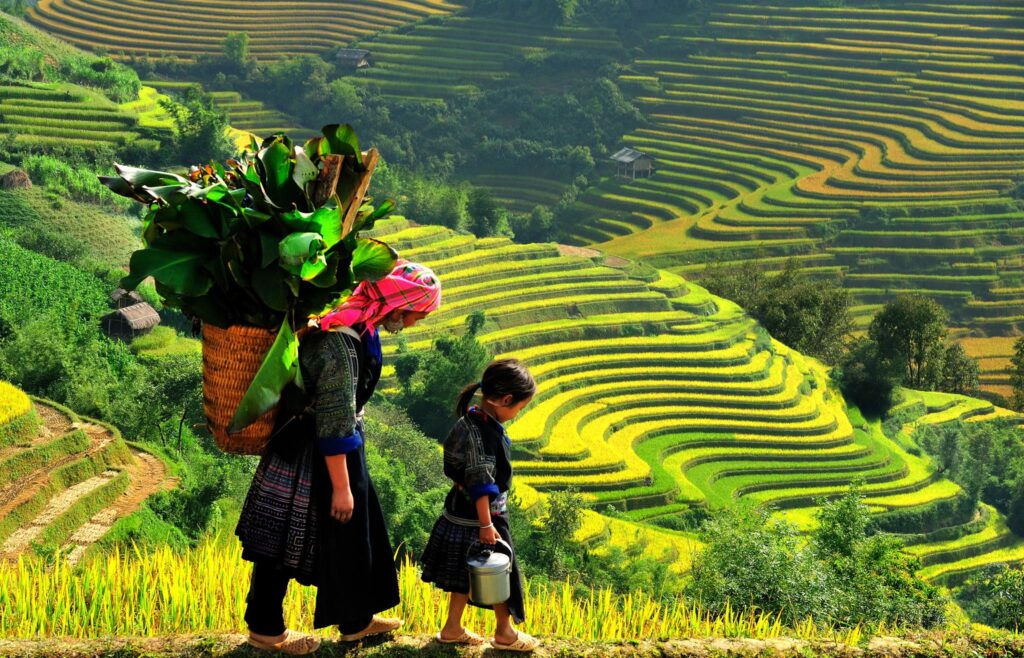
The main reason travellers come here is the landscape. The mountains are covered with rice terraces carved into the hillsides by generations of local farmers. During the green season, the valleys glow with fresh rice fields. During the harvest season, the entire region turns gold.
Beyond the scenery, Mu Cang Chai is also a cultural destination. The region is home to Hmong, Thai and other ethnic minority communities. Villages are still closely connected to farming, traditional dress, local markets and mountain lifestyles.
For adventure travellers, Mu Cang Chai offers excellent trekking, motorbike routes, mountain photography and homestay experiences. It is one of the best places in Vietnam for travellers who want to slow down, walk through villages and connect with local life.
Hill Tribe Culture in Yen Bai
The hill tribe regions of Yen Bai are culturally rich and diverse. Mu Cang Chai is especially associated with the Hmong people, who have shaped the mountain landscape through centuries of terraced rice farming.
The Hmong communities in Mu Cang Chai are known for their traditional clothing, indigo textiles, farming skills and mountain villages. Many families live in wooden houses built along hillsides and valleys. Their daily lives are closely tied to the rice seasons, livestock, forest resources and local markets.
Thai communities are also found in the wider Yen Bai region, particularly around valleys such as Tu Le and Nghia Lo. These areas are known for stilt houses, rice farming, local food and a strong tradition of hospitality.
Visiting these communities should always be done respectfully. Travellers should ask before taking close-up photos, support locally owned homestays, buy local products when appropriate and avoid treating villages like open-air museums. The best experiences come from slow, respectful travel with local guides who understand the culture.
The Rice Terraces of Mu Cang Chai
The rice terraces are the heart of Mu Cang Chai’s identity. These fields are not just beautiful; they are living agricultural landscapes that have supported local communities for generations.
Because the land is steep and mountainous, local farmers created terraces to hold water and grow rice. The result is one of Vietnam’s most impressive landscapes, with thousands of curved rice fields following the natural shape of the mountains.
Some of the most famous rice terrace areas include La Pan Tan, Che Cu Nha and De Xu Phinh. These areas are often considered the most photogenic parts of Mu Cang Chai.
The terraces are especially beautiful during two periods of the year. In May and June, the water-pouring season begins, when fields reflect the sky like mirrors. In September and October, harvest season turns the mountains golden.
The Vietnam National Tourism Authority notes that Mu Cang Chai is famous for more than 2,000 hectares of terraced rice fields, with important areas recognised as national heritage landscapes.
Best Villages to Visit in Mu Cang Chai
La Pan Tan
La Pan Tan is one of the most famous villages in Mu Cang Chai. It is known for some of the most dramatic rice terrace views in Vietnam. The fields here curve around the mountains in layers, creating perfect viewpoints for photography and trekking.
This is one of the best places to visit during harvest season. Early morning and late afternoon offer the best light for photos.
Che Cu Nha
Che Cu Nha is more remote and less developed than La Pan Tan. The road into the village can be rough, but the reward is a quieter experience with beautiful terraces and authentic Hmong village life.
This area is excellent for travellers who want to walk through rice fields, meet local families and experience the slower rhythm of mountain farming communities.
De Xu Phinh
De Xu Phinh is another important rice terrace area in Mu Cang Chai. It offers wide valley views, traditional villages and excellent trekking opportunities.
Because it receives fewer visitors than some better-known viewpoints, De Xu Phinh is a good choice for travellers who prefer quiet landscapes and less crowded trails.
Tu Le
Tu Le is located before Khau Pha Pass and is often included on Mu Cang Chai itineraries. The valley is famous for rice fields, Thai culture, hot springs and beautiful mountain scenery.
Many travellers stop in Tu Le for a night before continuing over Khau Pha Pass to Mu Cang Chai.
Lim Mong and Lim Thai
Lim Mong and Lim Thai are beautiful villages near Tu Le. They are excellent for short walks, photography and cultural experiences. The villages are surrounded by rice fields and mountain slopes, making them ideal stops on the journey to Mu Cang Chai.
Trekking in Mu Cang Chai
Trekking is one of the best ways to experience Mu Cang Chai. The region is not just about viewpoints; the real beauty is found by walking through the rice terraces, crossing small streams and visiting villages that are hidden away from the main road.
Unlike some heavily developed trekking destinations, Mu Cang Chai still feels raw and authentic. Trails are often working paths used by farmers rather than formal tourist routes. This makes trekking here feel more natural and connected to local life.
Popular Trekking Areas
- La Pan Tan: Best for iconic rice terrace views and photography.
- Che Cu Nha: Best for remote village trekking and quiet landscapes.
- De Xu Phinh: Best for scenic valley walks and cultural encounters.
- Tu Le Valley: Best for easier walks and Thai village experiences.
- Lim Mong Valley: Best for short treks with beautiful mountain scenery.
What to Expect When Trekking
Treks in Mu Cang Chai can range from short village walks to full-day mountain routes. Trails may include rice terrace paths, dirt tracks, forest sections, steep climbs and narrow village roads.
During the rainy season, paths can become slippery. Good walking shoes are important. Travellers should also bring water, sun protection, light rain gear and a camera.
A local guide is strongly recommended, especially for longer routes. Guides help with navigation, explain local culture and create better connections with village communities.
Best Trekking Style
The best trekking in Mu Cang Chai is slow and flexible. Instead of rushing from viewpoint to viewpoint, take time to walk through the fields, visit local homes, stop at small markets and watch daily life unfold.
For photographers, early morning is ideal for misty valleys and soft light. Late afternoon is best for golden mountain views.
Best Transportation Options to Mu Cang Chai
Getting to Mu Cang Chai requires planning because there is no airport or direct train service. Most travellers begin their journey in Hanoi.
Private Car from Hanoi
A private car is the most comfortable and flexible way to reach Mu Cang Chai. The journey usually takes around 6 to 8 hours, depending on stops and road conditions.
This is the best option for families, photographers, small groups and travellers who want to stop at Nghia Lo, Tu Le and Khau Pha Pass along the way.
Limousine Van or Tourist Bus
Limousine vans and tourist buses are more affordable than private cars. They usually connect Hanoi with Nghia Lo, Tu Le or Mu Cang Chai town.
This option is suitable for independent travellers, but it offers less flexibility for photo stops and village visits. Schedules may also vary depending on season and demand.
Motorbike
For experienced riders, travelling to Mu Cang Chai by motorbike is one of the great adventure routes in Northern Vietnam. The road from Hanoi through Nghia Lo, Tu Le and Khau Pha Pass offers mountain views, village stops and excellent riding.
However, this route should not be underestimated. Roads can be wet, steep and busy in sections. Riders should have proper experience, protective gear and a reliable motorbike.
Guided Tour
A guided tour is often the best option for travellers who want a stress-free experience. A good local tour can include transport, accommodation, trekking guides, meals, village visits and photography stops.
This is especially useful in Mu Cang Chai because many of the best villages and trekking routes are difficult to find without local knowledge.
Train and Road Combination
There is no direct train to Mu Cang Chai. Some travellers take a train toward Lao Cai for other northern routes, but for Mu Cang Chai itself, road transport from Hanoi is usually the most practical option.
Best Time to Visit Mu Cang Chai
May to June: Water-Pouring Season
This is when local farmers begin preparing the rice fields. Water fills the terraces, creating mirror-like reflections across the mountains. It is a beautiful time for photography.
July to August: Green Season
The terraces become lush and green. This is a good time for trekking, although rain is more common and trails can be slippery.
September to October: Harvest Season
This is the most famous time to visit Mu Cang Chai. The rice fields turn golden, and the valleys become some of the most beautiful landscapes in Vietnam.
November to April: Cool Mountain Season
The scenery is less colourful than during rice season, but the cooler weather is good for trekking. This period is also quieter, with fewer visitors.
Suggested 4-Day Mu Cang Chai Itinerary
Day 1: Hanoi to Nghia Lo or Tu Le
Leave Hanoi in the morning and travel northwest through rural Vietnam. Stop for lunch along the way before reaching Nghia Lo or Tu Le. Spend the evening in a local guesthouse or homestay.
Day 2: Tu Le, Khau Pha Pass and Mu Cang Chai
Visit Tu Le Valley and nearby villages before crossing Khau Pha Pass. Continue to Mu Cang Chai with stops at viewpoints and rice terraces along the way.
Day 3: Trekking in La Pan Tan, Che Cu Nha or De Xu Phinh
Spend a full day trekking through rice terraces and Hmong villages. This is the best day for photography, cultural experiences and local interaction.
Day 4: Mu Cang Chai to Hanoi
Begin the return journey to Hanoi, with optional stops in Tu Le or Nghia Lo depending on timing.
Frequently Asked Questions
Is Mu Cang Chai worth visiting?
Yes. Mu Cang Chai is one of Vietnam’s most beautiful mountain destinations, especially for rice terraces, trekking, photography and ethnic minority culture.
How far is Mu Cang Chai from Hanoi?
Mu Cang Chai is around 300 kilometres from Hanoi. Travel time is usually 6 to 8 hours by road.
What is the best month to visit Mu Cang Chai?
September and October are the best months for golden rice terraces. May and June are also beautiful during the water-pouring season.
Can you trek in Mu Cang Chai?
Yes. Mu Cang Chai is one of the best trekking destinations in Northern Vietnam, with routes through rice terraces, villages, valleys and mountain trails.
Do I need a guide?
A guide is recommended for longer treks and village routes. Local guides help with navigation, translation and cultural understanding.
Is Mu Cang Chai better than Sapa?
Mu Cang Chai is quieter and less commercial than Sapa. Sapa has more tourism infrastructure, while Mu Cang Chai offers a more remote and authentic mountain experience.
Final Thoughts
Mu Cang Chai and the hill tribe regions of Yen Bai offer one of the most rewarding travel experiences in Vietnam. The combination of golden rice terraces, remote Hmong villages, mountain passes and trekking routes makes this region unforgettable.
For travellers who want to go beyond the standard tourist trail, Mu Cang Chai is a perfect choice. It is wild enough to feel adventurous, beautiful enough to impress any photographer and culturally rich enough to leave a lasting memory.
Plan your next Northern Vietnam adventure with Go Vietnam Adventure and discover the real mountain landscapes of Vietnam.